Myths, Malice, and Power: The Engineered Illusions of Modern Life
Three meals a day, the “Girl Boss”, the soulmate, the fall of a tech titan. Four things we are told are natural, and the money and power behind each one.

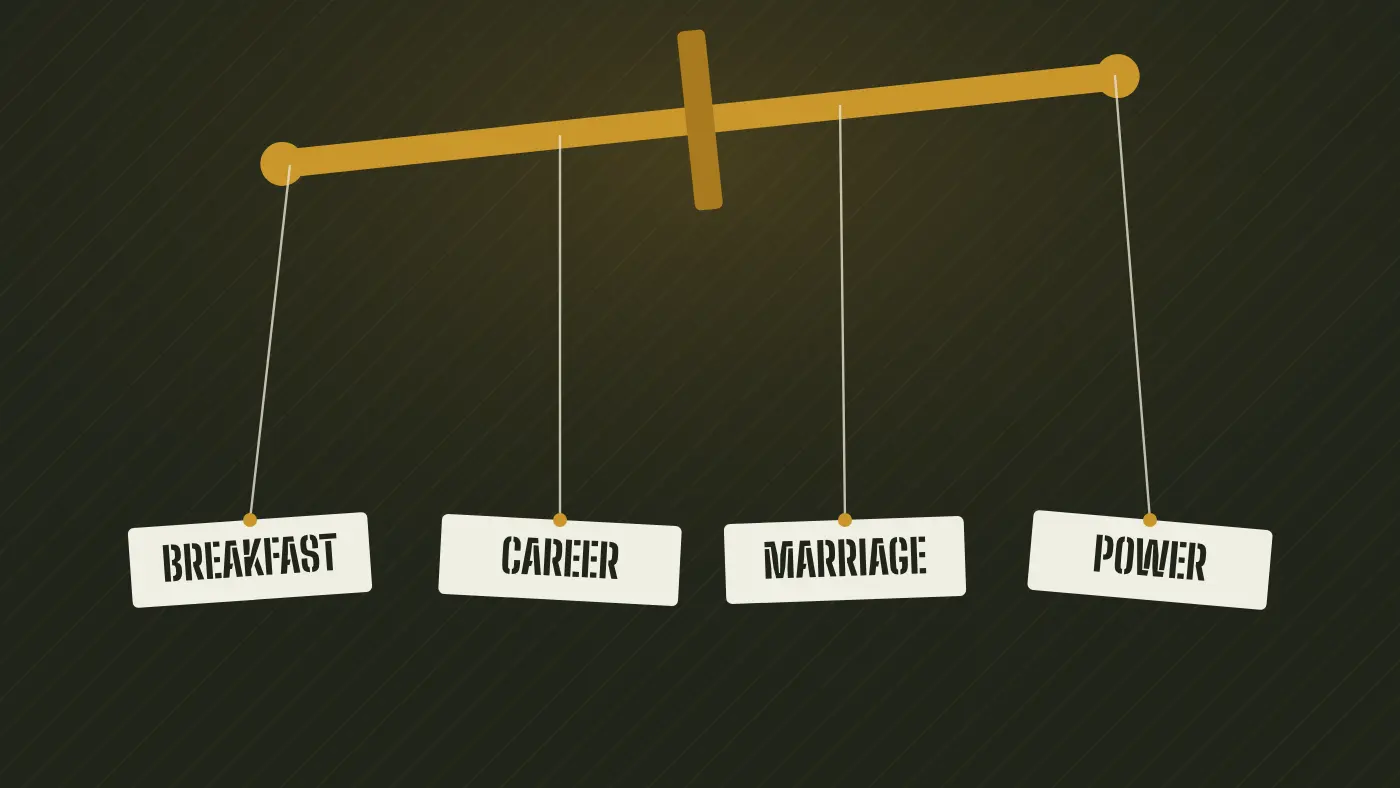
Think your daily lifestyle is based on human biology or a natural moral compass? Think again.
Most of what we consider "natural" human behavior was meticulously engineered by corporations, economists, and ancient property laws. We are mammals living inside a carefully constructed economic machine, governed by rules disguised as common sense, liberation, or morality.
When you strip away the romanticism, you find the malice and power driving the narrative. Here are four massive myths we’ve been sold as human nature, from the food we eat to the downfall of today’s most powerful visionaries.
Myth 1: We Are Biologically Wired for Three Meals a Day
For most of human history, people ate once or twice a day. The Romans actually considered eating more than one large meal a sign of gluttony.
So where did the "three square meals" come from? The Industrial Revolution. Factory managers needed workers to consume heavy calories before a grueling morning shift, introduced a quick midday "luncheon" to keep machines running, and pushed the main meal to the evening when workers finally went home.
By the 20th century, food corporations capitalized on this factory schedule. Cereal companies like Kellogg and pork packers launched massive campaigns claiming "breakfast is the most important meal of the day." It was the exact same playbook used in India when Doordarshan ads convinced an entire generation that Dalda was a healthier, modern alternative to pure desi ghee. Western corporations wrapped an industrial factory schedule in a "health" narrative just to sell more product.
Myth 2: The "Girl Boss" Was Born Out of Pure Liberation
While working-class women have always labored out of sheer necessity, bringing affluent and middle-class homemakers into the corporate workforce was a massive, calculated economic strategy.
In 1929, the American Tobacco Company realized they were missing out on 50% of the market because it was taboo for women to smoke. They hired PR agents to parade women holding lit cigarettes in New York, branding them as "Torches of Freedom." They sold a highly addictive product as gender equality.
Later, during WWII, with over 20 million men killed globally and another 16 million deployed from the US alone, industries desperately needed bodies. Governments heavily promoted "Rosie the Riveter" and liberation narratives to fill the empty factory pods and sustain the wartime economy.
By the late 20th century, as male salaries increased and markets slowed, economists needed a shift. Corporate narratives like the "Girl Boss" solved two problems simultaneously: it flooded the labor market (which effectively checked and stagnated rising salaries) and created dual-income households. This skyrocketed family spending, driving the market away from basic essentials and heavily into real estate and high-end luxury goods.
Myth 3: Monogamy and the "Soulmate" Are Human Nature
We are mammals, and strict monogamy is incredibly rare in the mammalian world. For thousands of years as hunter-gatherers, humans lived in communal tribes where child-rearing was shared. Adults who survived childhood routinely lived healthy lives into their 70s.
Everything changed about 10,000 years ago during the Agricultural Revolution. As historian Yuval Noah Harari points out, we didn't domesticate wheat; wheat domesticated us. We traded a healthy, nomadic lifestyle to settle down, build huts, and protect grass.
With agriculture came the concept of private property, land, and livestock. Suddenly, men needed to know exactly who their biological heirs were so they could pass down their hard-earned wealth. Before DNA testing, the only way to guarantee a legitimate heir was to strictly control female sexuality.
Monogamy was invented as a dry, economic contract to protect the family estate. It was always hypocritical: kings, emperors, and high-ranking generals frequently ignored it, establishing harems while enforcing the rules on the masses. It was only much later that poetry, fiction, and eventually the Hollywood machine took this ancient property contract and rebranded it into a billion-dollar wedding industry built on the illusion of "soulmates."
Myth 4: The Moral Ouster of the Modern CEO
We live in an era of remote work, DNA testing, and unprecedented digital surveillance, yet we still pretend that the downfall of billionaire CEOs is simply about personal morality.
Take the recent ouster of Jensen Huang, who resigned after 33 years of building Nvidia into a multi-trillion-dollar AI superpower. The public narrative focused entirely on his extramarital affair with an executive whom, according to The New York Times, U.S. intelligence believes is a Chinese asset (an allegation that remains unproven).
But look closer at the geopolitics. Reports indicate U.S. officials were surveilling this woman months before the fallout. If the intelligence community knew a foreign agent was targeting the man controlling America's most critical tech infrastructure, why wasn't he warned? Why was he allowed to make a fatal mistake?
Because in the highest tiers of global power, intelligence agencies don't just protect assets, they accumulate leverage. Allowing a powerful figure to compromise himself makes him controllable. Nvidia chips are the new oil, and Washington is aggressively pushing to limit semiconductor exports to China. When a brilliant, untouchable founder becomes too powerful, too independent, or a hurdle to a geopolitical agenda, a moral failing is the perfect excuse to remove them.
It transfers control of a trillion-dollar asset from a visionary founder to compliant board members, institutional investors, and government regulators. We are told these men are ousted to protect corporate integrity, but in reality, it is a calculated political and economic power grab.
References
Where to check the facts in this story.
- Three Squares: The Invention of the American Meal by Abigail Carroll (Hachette)
- Edward Bernays and the 1920s bacon-and-eggs breakfast campaign for Beech-Nut, Wikipedia
- Dalda, the vanaspati brand marketed as a ghee alternative, Wikipedia
- Torches of Freedom: the 1929 Easter Parade cigarette stunt, Wikipedia
- Rosie the Riveter and the WWII female workforce, Wikipedia
- World War II casualties, Wikipedia
- Sapiens: A Brief History of Humankind by Yuval Noah Harari, Wikipedia
- The Origin of the Family, Private Property and the State by Friedrich Engels (1884): the classic argument linking monogamy to inheritance, Wikipedia
- Monogamy in animals, Wikipedia
- NVIDIA announces CEO transition: Jensen Huang resigns (SEC Form 8-K)
- Nvidia investigates whether CEO was targeted by suspected Chinese spy, Associated Press, 9 Nov 2026
- The woman at the center of Nvidia's Chinese spy scandal, Axios, 9 Nov 2026
- Nvidia pushes back against report linking its CEO to suspected Chinese intelligence asset, TweakTown